
News

Self-Determination Network News:
January 2026
Connect | Share |Learn | http://sdnetworkwi.org
Federal Fallout Update
Here are the recording and slides from the latest webinar that the Wisconsin Board for People with Developmental Disabilities puts on regarding the federal fallout. Here are the topics discussed in this webinar:
-
State Legislature, what to watch for at the end of session.
-
Congress is back and still undecided on health care and the biggest pieces of the 2026 federal budget that impact people with disabilities.
-
Policy changes the administration is making that impact people with disabilities and families, and continued coverage of impacts of HR 1.
We encourage you to continue to contact your legislators and let them know how these things will impact you and your family.
Free Three-Part Survival Coalition Training on Community Organizing
The Survival Coalition is hosting a series of community organizing trainings intended to strengthen collective action in the disability community. This is not self advocacy training, and will focus on how to join together around common issues. The target audiences for this training are grassroots activists, home care workers, and people with disabilities who are interested in joining together around shared concerns. Please see this flier for details.
Register here to commit to all three trainings.
Please note that the start date has been changed since the first announcement.

Disability Advocacy Day 2026
Save the date for the 2026 Disability Advocacy Day on Thursday March 19th in Madison. We'll be sending out information about details and registration in a few weeks. We hope to see you there!
Join the Wisconsin Disability Vote Coalition for a Lunch & Learn
Absentee voting is a convenient way for many people to vote. They’ll discuss how to request an absentee ballot for a specific election or the entire year. They will go over early in-person voting.

The Self-Determination Network includes some very talented members and we want to help you to get to know each other a little better. Member Spotlight is a great way for us to get to know each other better.
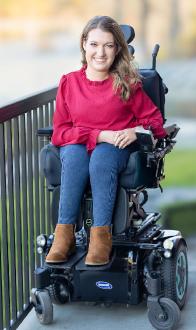
For this month, we're shining the Spotlight on Annie. This busy young woman just keeps adding to her resume. As former Ms. Wheelchair Wisconsin, she has been able to share her passion for advocacy and accessibility. Stop by this month's Member Spotlight to get to know Annie.
Who should we shine the spotlight on next?


Check out the Latest Videos!
The Self-Determination Channel is a YouTube channel by and for people with developmental or intellectual disabilities. Unlike other channels, the Self-Determination Channel stands stand out from other channels on YouTube because self-advocates host the videos, and decide and create the content. Videos are posted a couple times a month on a variety of topics self-advocates care about such as technology, employment, caregivers, independent living, and advocacy.
Check out the newest videos on the channel:
We encourage you to subscribe to the Channel (you can do so by clicking the red Subscribe button on any of the video pages).

Take five minutes to check out what's happening on the Self-Determination Network:
- Solutions to the Caregiver Crisis: Experts brainstormed many ideas to fix the caregiver crisis. Read about some of them.
- Big Workforce Innovation: Lilly Grossman's Beyond The Box Advocacy is building a federal disability support portability framework allowing services to follow individuals regardless of location, income, or marital status. Learn about this innovation.
- Listen: Emmy Award-winning disability rights leader Keith Jones critiques how the disability movement frames itself on the Civil Rights Movement while maintaining internal racism and discrimination. Listen to the interview.
- Changes to Disney Disney Disability Policies: Changes to Disney parks' Disability Access Service (DAS) program have some people upset. Find out why.
- Reluctance of Older People to Identify: Older Americans are reluctant to identify as being disabled. Learn why this is hindering them from qualifying them for accommodations. Read about why this is.
- 2026 Fall Internship: AAPD’s Internship Program places students and recent graduates with disabilities in paid internships. Interns build leadership skills, explore career opportunities, and connect with the disability community. Applications due February 5th.
- The Critical Role of Family Caregivers: A recent survey found that caregiving usually falls on one sibling. Learn what else the survey found.
- Changes to ABLE Accounts: Many changes to ABLE accounts took effect on January 1st. Find out what these are.
- Immigration Fears for Caregivers: About one-third of home care workers are immigrants, and now many fear deportation. Read about how this will further deepen the caregiver crisis.
- Worth Fighting For: The Executive Director of the Wisconsin Board for People with Disabilities discussed the current threats to disability programs and the power of Wisconsin's disability community. Take a look at this excellent article.
- IRIS Renewal Posted: The IRIS renewal was approved in early December. It's now posted on the DHS website. Check it out.
- Wheelchair User Goes to Space: A mechanics engineer at the European Space Agency made history by being the first wheelchair user to go to space. Learn about her endeavor.
- Town Agrees to Restore Accessible Voting Machine: After losing its case in two federal courts, a northern Wisconsin town has agreed to use an electronic voting machine designed for people with disabilities. Find out what happened and where this was.
- Hotel Accessibility: Despite the passage of the Americans with Disabilities Act 35 years ago, people with disabilities continue to face challenges in accessing accommodations at hotels. Learn about some of the barriers to have when staying at hotels.

Here's a sample of upcoming events listed on the Self-Determination Network:
- Webinar: Community Collaborations for Employment: Building Pathways That Work: January 13th, 2p.m. to 3:30p.m., Virtual
- Joint Meeting of ACL's Caregiving Advisory Councils: January 20th, 11:30a.m. to 3:30p.m., Virtual
- The Born-Accessible Design Approach: Cost-Effective, Inclusive, Compliant: January 20th, 11:30a.m. to 1p.m., Virtual
- Disability Vote Coalition: Lunch n Learn: January 20th, 12p.m. to 12:45p.m., Virtual
- Survival Coalition Community Organizing Training Part 1: January 28th, 10a.m. to 1p.m., Virtual
- Survival Coalition Community Organizing Training Part 2: February 11th, 10a.m. to 1p.m., Virtual
- Survival Coalition Community Organizing Training Part 3: February 25th, 10a.m. to 1p.m., Virtual
- Disability Advocacy Day: March 19th, Monona Terrace and the State Capitol, Madison WI
- National Self-Direction Conference: May 27th-29th, Minneapolis, MN
Post your event on the Self-Determination Network and it can be included in future Network News emails to members! Questions? Suggestions? Contact Stacy Ellingen.

The Self-Determination Network is powered by InControl Wisconsin and supported financially by our members and Sponsors. We couldn't keep this Network going with you! Find out how you can help support the Network.'
THE SELF-DIRECTION CENTER: Share Your Expertise—Submit a Proposal | 2026 National Self-Direction Conference
By SD Network, 2026-01-07
|
|
What's your story? Tell us a little bit about yourself.
Annie is a kind, fun, intelligent, and hardworking person with a great sense of humor. She’s 27 years old and lives in Dane County, Wisconsin. She’s a multi-business owner, social media influencer, author, graphic designer, speaker, Christian, and lifelong disability advocate. “My life and work embody the belief that disability doesn’t mean inability,” she tells us. She shares that she was diagnosed with a rare genetic disorder called Spinal Muscular Atrophy at 13 months and was using a wheelchair by age 2, she has dedicated her life to breaking barriers, championing inclusion, and inspiring others with a message of resilience and faith.
In 2023, she was crowned Ms. Wheelchair Wisconsin, using her platform Caring Is Caregiving to reach more than 100,000 people through 52 events across the state. From schools and conferences to organizations and media outlets, she has shared her passion for advocacy and accessibility. That same year, she competed at the Ms. Wheelchair America national competition, where she placed in the top five, earning Second Runner-Up and the Best Speech award! She was later honored as, Woman of the Year, in Dane County for her leadership and community impact!
Through her businesses, Annie Designs and Annie Speaks, she been able to combine her love for creativity, advocacy, and empowering others, whether through design, speaking, writing, or simply sharing about life. “My mission is simple but powerful: love, serve God and others, work hard, and never give up,” she says.
You can follow her journey on Instagram at @annieheathcote, visit annieheathcotedesigns.com to explore her creative work, and find her collaboration book at annie-speaks.com.
How are you involved with self-determination? Why did you join the SD Network?
Annie has attended the Self-Determination Conference three times now. “It’s a great conference that like-minded people and those under the umbrella of disability can come together to gain knowledge, resources, community, and create positive change,” she says. She wanted to join this network to connect with likeminded people, advocate more, and share her experiences and what she has learned with having a disability that can help others.
Tell us some good news - what's the most exciting thing happening for you (or in Wisconsin) in terms of self-determination?
Annie is excited to share that she recently became a published author through a global collaboration advocacy project. She’s one of the authors of Still We Rise, a powerful collection of true stories from ten disabled authors and resilient voices who share their journeys through paralysis, rare diseases, trauma, injustice, grief, and loss — and the unexpected strength and purpose they discovered along the way. She explains that These are raw, honest accounts of rising above hardship and finding healing in places they never thought possible. Each chapter ends with practical tools to help you navigate your own challenges and take your next steps with clarity and confidence. At its heart, this book is a reminder that God can meet and help us in any circumstance — and that no matter what we face, there’s always a way to rise above and move forward. Still We Rise is more than a book; it’s a movement of courage, compassion, and renewed hope for anyone navigating life’s ups and downs. Rise with us and get your personally signed copy today at annie-speaks.com!
What tip or resource would you like to share with people who want to be more self-determined?
Annie shares two tips with us:
- Invest in your social media platform for disability advocacy, to reach more people with the limited time and energy we have as disabled individuals.
- Believe in and accept Jesus as your Lord and Savior! She shares that her faith in Jesus changed her life and eternity for the better, by saving her soul, giving her disability meaning, and her life a loving joyful purpose! Annie encourages people to get involved with a church and have good community around you. (Romans 6:23, Romans 10:9-10, & John 1:12 ESV)
Annie also shares a list of disability-related books for better understanding and encouragement.
What are some of your hobbies?
Annie explains that creativity and joy are a part of her everyday life — from travel, art, and music to her experiences as a former elite athlete in the adaptive sport of Power Soccer, she enjoys living life to the fullest!
***We love hearing the views and opinions of Network members. We need to mention that the views and opinions expressed on this site are those of the person who is sharing them. They do not necessarily reflect InControl Wisconsin or any of our supporters and funders.
“Don’t stare.” “Don’t point.” “Come here.” “Lets go.” These are things we often hear parents say to children when they see something out of the ordinary. It could be a teenager with bright blue hair, a same sex couple kissing, or a person with a disability having a meltdown. Obviously, there are hundreds of millions of things that people consider out of the “norm.” A few years ago, I wrote an entry about going out of the norm. I just had gotten a drastic haircut that many considered out of the norm, and I talked about how people need to accept things that are out of their norm. While that’s still entirely true, there are some double standards that many minority groups, including the disability community, impose on themselves.
“How do you treat a person with a disability? Treat them the same as you do anyone else.” There are several memes on social media that have that message. It portrays that people who have disabilities should and want to be treated just like everyone else. While that’s true most of the time, the reality is that people with disabilities often require additional attention and support to be able to live life. The extra support needed automatically puts a stigma on us that in fact we can’t be treated just like everyone else. It’s not a negative thing, but it’s just a fact. Accommodations like handicapped parking, accessible seating, and disability benefits just amplify the fact that we cannot be treated like everyone else. While these accommodations are completely necessary, they automatically put people with disabilities out of the norm.
Having said that, there are some things that sometimes happen in the disability community that portray the idea that we don’t want to be treated like everyone else. Several years ago, I wrote an article about “perks” of having a disability having a disability. I discussed how when I was young my family felt very uncomfortable when going to the theme parks in Orlando because we were always ushered to the front of lines just because I had a disability. Why should we get special treatment just because I have a disability? They have tightened up the process since then, but that situation shows that people who have disabilities get special treatment. Personally, I feel that there are very few circumstances when that’s appropriate (like when a person is terminally or if someone has difficulty waiting in line specifically due to a disability).
Each spring, I cringe as the Night to Shine posts start popping up on social media. A Night to Shine is a program Tim Tebow sponsors. It’s a prom for people with disabilities. They host several across the country and usually many media outlets pick it up as a feel-good news story. At first, I’m sure most people think that it’s a great wholesome idea, but is highlighting people with disabilities going to a segregated dance really what we want to see in the 21st century? I know there are many different opinions about this, so I’ll leave it at that. Regardless of the various opinions, it’s another example of treating people with disabilities different.
Another controversial topic in the disability community is when adults with intellectual disabilities visit Santa. I don’t have an intellectual disability or have a close family member who does, so I’m going to refrain from sharing my opinion on this. Whether people agree with it or not, doesn’t change the fact that when adults with disabilities visit Santa, it’s out of the norm and amplifies that we aren’t treated the same as those without disabilities.
As a person who has a significant physical disability that often creates assumptions that I have an intellectual disability, it can be challenging to demystify wrong ideas when there are so many double standards. The disability community preaches that we want to be treated just like everyone else, but yet, when people see us getting special treatment or partaking in activities meant for children, what is the average person supposed to think?
We have come a long way in “normalizing disability,” but we have a ways to go. Do we, as a disability community, really expect to be treated like everyone else? In my opinion, that’s a question that we’re still trying to figure out how to answer. On one hand, we want to be treated as “normal” as possible, but, on the other, society continues to see people with disabilities receiving special treatment and participating in activities that aren’t age appropriate. I’m not sure that we do actually want to be treated like everyone else. Sure, in some way many of us do, but, in other ways, it’s just not feasible to “treat people with disabilities just like everyone else.” Maybe the disability community needs to start thinking about how we should reframe our message. Do we really want to be treated like everyone else or do we want to be accepted and respected for the people we are? I tend to think it’s a mixture of both ideas for most people in the community. At least, that’s the case with me!
***The views expressed here are strictly those of the author and do not necessarily reflect those of InControl Wisconsin, the Network or any of our sponsors
NATIONAL PUBLIC RADIO: 35 years after ADA, people with disabilities still find hotels unaccommodating
By SD Network, 2025-12-31
This article from NPR highlights the ongoing challenges faced by people with disabilities in accessing accommodations at hotels, even 35 years after the passage of the Americans with Disabilities Act (ADA). Despite federal laws mandating accessibility, an NPR survey and interviews reveal widespread issues, including inaccessible rooms, design flaws, and inadequate staff training. The article shares personal stories of travelers encountering barriers such as high beds, inaccessible bathrooms, broken pool lifts, and non-functional wheelchair shuttles. It explores systemic issues within the hotel industry, such as ownership complexities and high staff turnover, which hinder compliance with ADA standards. The piece also discusses the role of government enforcement, the impact of "drive-by lawsuits," and the lack of accessibility in alternative lodging options like Airbnb. While some hotels and staff are praised for their efforts, many travelers feel excluded and frustrated, leading some to avoid travel altogether. The article underscores the need for consistent accessibility improvements and highlights the business opportunity for hotels that prioritize inclusivity.
WISCONSIN PUBLIC RADIO: Northern Wisconsin town agrees to bring accessible voting machine back
By SD Network, 2025-12-30
After losing its case in two federal courts, a northern Wisconsin town has agreed to use an electronic voting machine designed for people with disabilities. The dispute stems from the town’s 2023 decision to remove voting machines due to their “controversial nature.” In a settlement approved by U.S. District Court Judge James Peterson on Dec. 19, the Rusk County Town of Thornapple agreed to make at least one voting machine designed for people with disabilities available in all federal elections through 2026.
ABC NEWS: For the 1st time ever, a person who uses a wheelchair will fly to space
By SD Network, 2025-12-22
A historic milestone in space exploration is about to happen, as Michaela "Michi" Benthaus, an aerospace and mechatronics engineer at the European Space Agency (ESA), is set to become the first person who uses a wheelchair to travel to space. The article details her journey aboard Blue Origin's NS-37 mission, which will take her and five other crew members past the Kármán line on a suborbital flight. Benthaus, who suffered a spinal cord injury in 2018, has been an advocate for accessibility in space exploration and has participated in various space-related activities, including a Zero-G research flight and an analog astronaut mission.
Major changes to ABLE accounts are coming in 2026. The ABLE Age Adjustment Act moves the onset age of the disability to 46. It was previously 26. The change will allow more people to be eligible to create ABLE accounts.
|
On December 2, 2025, the IRIS 1915(c) waiver renewal was approved by the Centers for Medicare & Medicaid Services (CMS) for a five-year period with effective dates from January 1, 2026, to December 31, 2030. Learn more about the IRIS Waiver Renewal. |
NEW HORIZONS UNLIMITED: A Story of Being Human: A Future Worth Fighting For
By SD Network, 2025-12-19
New Horizons Un-Limited interviewed BPDD's Executive Director Beth Swedeen about current threats to disability programs and the power of Wisconsin's disability community. She also discussed how great it is to see so many stepping up and speaking out.