
Stacy's Journal: Double Standards

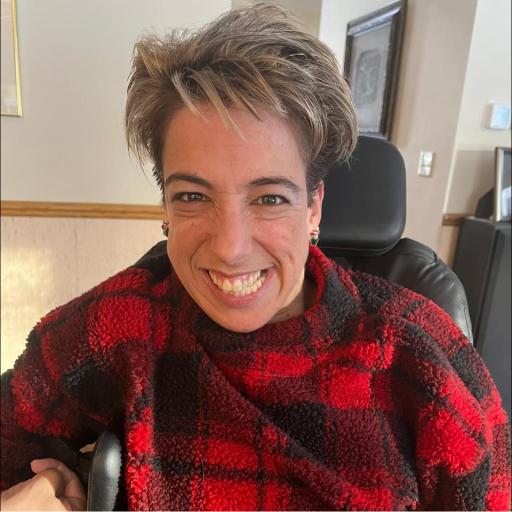
“Don’t stare.” “Don’t point.” “Come here.” “Lets go.” These are things we often hear parents say to children when they see something out of the ordinary. It could be a teenager with bright blue hair, a same sex couple kissing, or a person with a disability having a meltdown. Obviously, there are hundreds of millions of things that people consider out of the “norm.” A few years ago, I wrote an entry about going out of the norm. I just had gotten a drastic haircut that many considered out of the norm, and I talked about how people need to accept things that are out of their norm. While that’s still entirely true, there are some double standards that many minority groups, including the disability community, impose on themselves.
“How do you treat a person with a disability? Treat them the same as you do anyone else.” There are several memes on social media that have that message. It portrays that people who have disabilities should and want to be treated just like everyone else. While that’s true most of the time, the reality is that people with disabilities often require additional attention and support to be able to live life. The extra support needed automatically puts a stigma on us that in fact we can’t be treated just like everyone else. It’s not a negative thing, but it’s just a fact. Accommodations like handicapped parking, accessible seating, and disability benefits just amplify the fact that we cannot be treated like everyone else. While these accommodations are completely necessary, they automatically put people with disabilities out of the norm.
Having said that, there are some things that sometimes happen in the disability community that portray the idea that we don’t want to be treated like everyone else. Several years ago, I wrote an article about “perks” of having a disability having a disability. I discussed how when I was young my family felt very uncomfortable when going to the theme parks in Orlando because we were always ushered to the front of lines just because I had a disability. Why should we get special treatment just because I have a disability? They have tightened up the process since then, but that situation shows that people who have disabilities get special treatment. Personally, I feel that there are very few circumstances when that’s appropriate (like when a person is terminally or if someone has difficulty waiting in line specifically due to a disability).
Each spring, I cringe as the Night to Shine posts start popping up on social media. A Night to Shine is a program Tim Tebow sponsors. It’s a prom for people with disabilities. They host several across the country and usually many media outlets pick it up as a feel-good news story. At first, I’m sure most people think that it’s a great wholesome idea, but is highlighting people with disabilities going to a segregated dance really what we want to see in the 21st century? I know there are many different opinions about this, so I’ll leave it at that. Regardless of the various opinions, it’s another example of treating people with disabilities different.
Another controversial topic in the disability community is when adults with intellectual disabilities visit Santa. I don’t have an intellectual disability or have a close family member who does, so I’m going to refrain from sharing my opinion on this. Whether people agree with it or not, doesn’t change the fact that when adults with disabilities visit Santa, it’s out of the norm and amplifies that we aren’t treated the same as those without disabilities.
As a person who has a significant physical disability that often creates assumptions that I have an intellectual disability, it can be challenging to demystify wrong ideas when there are so many double standards. The disability community preaches that we want to be treated just like everyone else, but yet, when people see us getting special treatment or partaking in activities meant for children, what is the average person supposed to think?
We have come a long way in “normalizing disability,” but we have a ways to go. Do we, as a disability community, really expect to be treated like everyone else? In my opinion, that’s a question that we’re still trying to figure out how to answer. On one hand, we want to be treated as “normal” as possible, but, on the other, society continues to see people with disabilities receiving special treatment and participating in activities that aren’t age appropriate. I’m not sure that we do actually want to be treated like everyone else. Sure, in some way many of us do, but, in other ways, it’s just not feasible to “treat people with disabilities just like everyone else.” Maybe the disability community needs to start thinking about how we should reframe our message. Do we really want to be treated like everyone else or do we want to be accepted and respected for the people we are? I tend to think it’s a mixture of both ideas for most people in the community. At least, that’s the case with me!
***The views expressed here are strictly those of the author and do not necessarily reflect those of InControl Wisconsin, the Network or any of our sponsors


I see your point. Thanks for sharing.
I think "wanting to be treated like everyone else" INCLUDES wanting and needing accommodations. Nondisabled people get accommodations, too - they just don't call them that. Asking for a standing desk at work is an accommodation that plenty of nondisabled people want. Eyeglasses are an accommodation that is so accepted that it's no longer legally considered a disability in the U.S. to need glasses. Requesting that the host make your favorite food or not make a food you don't like when you come to dinner - accommodation. But people rarely bat an eye when it's about preferences, compared to the fuss they make when those requests are due to food allergies or ARFID.
Everyone wants to be treated like they matter, like their needs matter. Everyone, disabled and nondisabled, wants to be shown respect, have their needs are met, and be supported and cared for in ways that feel good to them. Just like I wouldn't offer a tall person a stepstool, I wouldn't expect accessible parking for someone who doesn't need it. But I expect stepstools, accessible parking and seating, and fast lanes at theme parks to be available to everyone who does need them, for whatever reasons.
I don't think inspiration p*rn (like segregated proms) falls into the same category as accessible parking and fast lanes at theme parks. That's not an accommodation, that's segregation, and it's different. Disabled people can go to "regular" proms and dances. And if we do have dances for our community, they shouldn't be newsworthy (unless they're, like, dancing on a pure gold dance floor or something). A person with Down Syndrome going on a date or to a dance isn't any more of a news story than a nondisabled person going to a dance. And I don't think most disabled people WANT to be objectified in those kinds of stories - ableism does it TO us without our consent.
But when it comes to activities that aren't "age appropriate" -- who says? Why not? If something brings a person joy and doesn't cause harm to anyone or anything else, why shouldn't they do it? Ideas about what is "age appropriate" are rooted in ableism. Let adults enjoy cartoons, stuffed animals, toys, comfort objects, and yes, sure, visits to Santa, if that's what they want!