

News
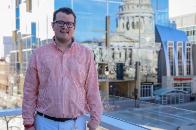
What's your story? Tell us a little bit about yourself.
Phillip lives in Madison, Wisconsin. He is a Clerical Assistant at TMG, and has worked there for almost seven years.
How are you involved with self-determination? Why did you join the SD Network?
Phillip is one of the hosts of the newly launched Self-Determination Channel, and he’s also a Buddy Director for his local Best Buddies chapter. He explains that all of this has helped him become more involved with self-determination and being a better advocate for himself and others. He joined the Self-Determination Network to meet others in the disability community, in order to create new friendships and create change in the world. “We all are capable of bringing change, one connection at a time,” he says.
Tell us some good news - what's the most exciting thing happening for you (or in Wisconsin) in terms self-determination?
For Phillip, the most exciting thing in Self-Determination that’s happening in Wisconsin right now is the Self-Determination Channel. He feels it gives advocates an outlet or a platform to share their experiences or a story with others who are going through the same thing. He explains that they are looking for others who are interested in having a video on the Self-Determination Channel. “We’d love for you to share your story,” he exclaims.
What tip or resource would you like to share with people who want to be more self-determined?
A tip that Phillip would like to share with someone who wants to lead a more self-determined life is to never be afraid to advocate for yourself. “As people with disabilities we are the best at knowing what we want in our lives and when we need to ask for help. Do not be afraid of saying no and expressing how you feel if someone makes you feel uncomfortable or tries to control what you do, you know yourself best and communication is always the key,” he explains.
What are some of your hobbies?
Phillip enjoys reading, writing, getting together with friends, traveling, and watching movies. “If you ever need someone to help with Oscar trivia then I’m your guy,” he says.
***We love hearing the views and opinions of Network members. We need to mention that the views and opinions expressed on this site are those of the person who is sharing them. They do not necessarily reflect InControl Wisconsin or any of our supporters and funders.
WISCONSIN PUBLIC RADIO: Wisconsin Receives Over $1M To Help People With Disabilities Get Affordable Housing
By SD Network, 2019-12-07
It was recently announced that Wisconsin will get more than one million dollars to provide people with disabilities affordable housing. Housing authorities across the state will get extra Section 8 (a federal rent assistance program) vouchers.
MILWAUKEE JOURNAL SENTINEL: Tony Evers signs bill to remove voting requirement that has turned away people with disabilities
By SD Network, 2019-11-23
Governor Evers recently signed a bill into law that removes the requirement for people who are unable to say their name and address because of a disability. Instead, poll workers will rely on the voter's identification card and allow another person accompanying the voter to say the voter's name and address. It's hoped because of this new law that more people with disabilities will have the opportunity to vote
More characters with disabilities are set to appear on prime-time TV this season than ever before; however, a new report finds that people with disabilities are still underrepresented. Of the 879 characters expected on broadcast programming this season, only 3.1% have disabilities.
DISABILITY SCOOP: Online Matching Service Pairs Adult Roommates With Developmental Disabilities
By SD Network, 2019-11-19
An online service that's believed to be the first of its kind is helping people with developmental disabilities find compatible roommates and settle into homes independent from their families. All of the roommates have some type of physical or developmental disability. They are matched in two- or three-person housing arrangements, with some needing an extra bedroom for a full-time caregiver. Others need a few hours of outside support each week.
DISABILITY SCOOP: Disability-Related Hate Crimes Up Sharply, FBI Data Shows
By SD Network, 2019-11-19
Recently released data indicates that hate crime incidents targeting people with disabilities are on the rise. In 2018, 177 hate crime offenses based on disability bias were reported compared to 128 the year before. According to the report, of the disability-related offenses logged, 110 targeted those with mental disabilities while 67 affected those with physical disabilities.
When the annual cost of living (COLA) increases, there's usually an increase in the Social Security and Supplemental Security Income (SSI) benefit amount. Recently, it was announced that the COLA will increase in 2020, so Social Security benefits will increase by 1.6% beginning in January.
MILWAUKEE JOURNAL SENTINEL: Wisconsin voters with disabilities face a variety of barriers. A state report on the problems is two years late.
By SD Network, 2019-11-18
Every adult should be able to vote, but various barriers continue to prevent people with disabilities from doing so. Everything from not being able to verbally state their name, to building access issues, to not being able to use the actual voting machine... Numerous problems continue to be reported across the state. Many organizations and advocacy groups are working on getting these issues addressed.