

News
 Self-Determination Network News: November 2015
Connect|Share|Learn|http://sdnetworkwi.org/
2015 Self-Determination Conference
We really enjoyed seeing so many of our members at this years Self-Determination Conference. Wed love to hear what you thought of it. Weve started a discussion about it, so you can share your experience, comments, and ideas. Lets keep the conversation going!
We want to congratulate this year's Diehard Award winners who were recognized at the conference.These individuals received a Diehard Award for going above and beyond in supporting the lives of people with disabilities. Many of the winners are members of our Network. Please help us congratulate and thank these members for their outstanding advocacy efforts:
- Jane Jushka is involved various advocacy groups and serves as a mentor for People First.
- Ginger Beuk was very active in getting an accessible playground built in her community and is also very involved in many advocacy groups.
- Marie Massart helped start a People First group in her community.
- Julie Burish is a parent advocate who has been very involved in Save IRIS.
- Jason Endres is very active in various advocacy groups such as Save IRIS and is the president of People First Wisconsin.
- Nancy Gapinski is another parent advocate who has been very involved in Save IRIS.
- Marion Holmberg is yet another parent advocate who has been very involved in Save IRIS.
- Erin Miller is a strong self-advocate and is involved in Save IRIS.
Changes to Wisconsin Long-Term Care: Whats Next?
On November 18th, theCommittee on Aging and Long-Term Care held an Informational hearing on Medicaid Managed Care -Family Care-IRIS 2.0. Linksto the video recording of itandthePowerPoints that were used can be found on our Resource page.
In addition,in late October, InControlWisconsin released itscomments on the newLong-Term Care plan for Wisconsin. We encourage you take a few minutes to read these over and add your commentsas well.
It Only Takes "Five"
Take five minutes to check out what's happening on the Self-Determination Network:
- Input Needed: Angie is looking for direct support professionals to complete an online survey. Could you help her? Or do you know someone that could help her?
- Get Involved: Marie posted about her involvement in People First Wisconsin and what it has done for her. Shes encouraging others to contact her to learn how to become involved.
- Benefits Remain Unchanged: This is an interesting article about how Social Security benefits will remain the same in 2016.
- Call for Student Artists: VSA Wisconsin is looking for student artists (ages 5-21) with disabilities. Submissions due by February 15th, 2016.
- Neat New App: This is a great article a new app that locates the nearest handicapped parking spots.
- Call for Proposals: Proposals are now being accepted for the 2016 Multiple Perspectives Conference. Proposals are due January 18th, 2016.
- Post news or start a discussion: It's easy to do and a great way to share information and network with others!
Stacys Journal
For November, Stacy shares about her experience attending the Self-Determination Conference with us. We encourage you to ask her questions and/or share your experiences as well.
 New Members
Stop by to welcomeour newest members:
- Hes the President of People First Wisconsin.
- She wants to keep updated about current issues, so she can advocate for herself.
- This SDS coordinator wants to share information and resources.
- This parent and advocate is a member of Save IRIS.
- He learned about the Network at the Self-Determination Conference.
- She wants to learn more about the healthcare industry.
- She works with people with disabilities and wants to become a better advocate.
- This advocate learned about the Network from her friend.
Do you know someone who should join the Self-Determination Network? Spread the word and invite friends, families and other interested folks!
 Upcoming Events
Here's a sample ofupcoming eventslisted on the Self-Determination Network:
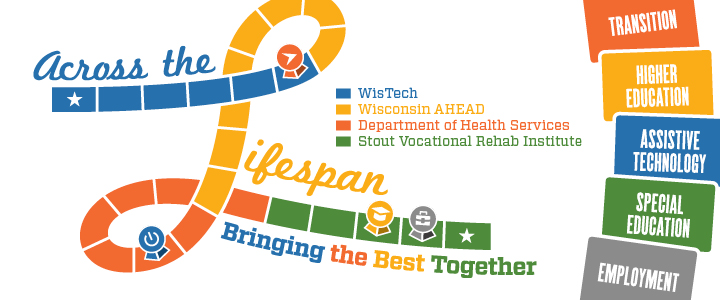
- Across the Lifespan Conference: December 3rd to 4th, Chula Vista Resort, Wisconsin Dells WI
- Wisconsin Transition Conference: February 18th to 19th, Kalahari Resort, Wisconsin Dells WI
Post your eventon the Self-Determination Network and it can be included in future Network News emails to members! Questions? Suggestions? Contact Stacy Ellingen.

The Self-Determination Network is powered by In Control Wisconsin and supported financially by ourmembersandSponsors. We couldn't keep this Network going with you! Find out how you can help support the Network.
We want to congratulate this year's Diehard Award winners who were recognized at the Self-Determination Conference. These individuals received a Diehard Award for going above and beyond in supporting the lives of people with disabilities. Please help us congratulate and thank these people for their outstanding advocacy efforts:
- John O'Keefe
- Jane Jushka
- Mary Lynn Larson
- Ginger Beuk
- Marie Massart
- Jessica Nell
- Julie Burish
- Jason Endres
- Sally Flaschberger
- Nancy Gapinski
- Marion Holmberg
- Erin Miller
Call for Proposals: Multiple Perspectives on Access, Inclusion & Disability
By SD Network, 2015-11-13
The Sixteenth Annual
Multiple Perspectives on Access, Inclusion & Disability
April 13 - 14, 2016
The Ohio State Universitys Columbus Campus
This past July marked the 25thanniversary of the Americans With Disabilities Act; November the 20thAnniversary of the Disability Discrimination Act in Brittan; and December, 2016, will be the 10thanniversary of the U.N. Convention on the Rights of People with Disabilities.
It is time to move beyond the letter of the law to the spirit of the law; to shift our focus from redressing human and environmental problems through remedial design to preventing problems through holistic design.
Leslie Kanes Weisman
Multiple Perspectives is an ongoingexploration of disability, a conversation including many voices and reflecting perspectives gained through experience and research; theory and practice, arts and sciences.
Preference will be given to presentations that encourage discussions across the typical social, political, and disciplinary boundaries; connect the individual to local, national and international approaches; or consider parallels, distinctions and intersections with race, gender and ethnicity.
Past programs and conference updates as they become available can be found at:http://ada.osu.edu/conferences.htm.
To be on the mailing list for the conference, send e-mail toADA-OSU@osu.edu
The Multiple Perspectives Conference is hosted by Ohio State Universitys ADA Coordinators Office is made possible thanks to the generosity of the Ethel Louise Armstrong Foundation Endowment Fund and ongoing support from The Ohio State University.
SUBMISSION GUIDELINES FOR MULTIPLE PERSPECTIVES 2014
Proposals are due January 18th, 2015
Proposals should be submittedby e-mail as an attachment (Word, Word Perfect, TXT, or RTF formats)toADA-OSU@osu.edu withMultiple Perspectives 2016in the subject line.
Proposals must include:
1.Name of each presenter with titles, institutions, employers etc. as appropriate
2.Contact information (phone, mailing address, and e-mail) if there is more than one presenter please indicate one individual as the contact and lead presenter.
3.Title of Presentation (12 words or less)
4.Description (700 words or less) Please describe the content, focus and desired outcomes for the presentation using these questions as a guide.
- What is the format of the presentation (Lecture, Panel, Discussion, Performance, Other)?
- Who is the intended audience (educators, employers, businesses, advocates, students, consumers, researchers, or other)?
- How familiar should the audience be with the topic (beginner, intermediate, advanced)?
- What are your three main goals for the presentation?
Please Note:The full conference fees will be waived and lunch provided for presenters of accepted proposals. Presenters are responsible for their own travel and lodging.
This is a very interesting article inDisabled Worldabout about a free app that searches the nearest handicapped parking spots. It started in Poland, but is rapidly growing to the US and other countries. They're encouraging everyone to help them locate handicapped spots in their area. It sounds like a really neat idea!
iParkomat Disabled Parking Spots App
Brief Synopsis:IParkomat provides free and open database to search for nearest blue-badge parking spots by anyone.
"The database of available parking spots is constantly increasing, thanks to a growing iParkomat community, around the globe."
Most people with a disability can get a drivers licence - and even those who cannot and travel by car with someone else should have transportation barriers reduced to minimum.
Although many disabled parking spots are created, there is still no specific, universal database that would allow people to quickly and easily find the closest disabled parking spot, from any location. iParkomat.com wants to change that.
As of only a couple of days ago, iParkomat has launched new functionality that allows users to register, store and search information for any disabled parking spot in the world. Now people with disabilities can find a place for their cars in the most convenient location - with one tap on their smartphone.

IParkomat provides free and open database to search for nearest blue-badge parking spots by anyone, and absolutely anyone can register a disabled parking spot through his/her smartphone or computer, making the parking spot immediately searchable and available to all in need.
The database of available parking spots is constantly increasing, thanks to a growing iParkomat community, around the globe - our solution is aimed to help reduce transportation barriers and increase the touristic possibilities of your city for all persons with disabilities.
iParkomat invites you and local authorities for cooperation.
The city of Warsaw, Poland, where iParkomat has its roots, has already provided data on public parking places for the disabled within the city, and now the entire citys population can find the location of all of the hundreds of public parking spaces for people with disabilities. Users can also find the first disabled parking spots registered in the US, Spain, Germany, and other countries.
iParkomat is currently in talks with some of the largest cities around the globe, and invites all individuals, businesses, foundations and associations to join their effort in reducing transportation barriers for people with disabilities.
We will be very grateful if you could provide us with data about public disabled parking spaces located within your municipality or county. As soon as we receive the data we will import locations of each parking spaces for the disabled and we will present them for free to all in need - iparkomat.com
Source: http://www.disabled-world.com/assistivedevices/apps/iparkomat.php
This is an interesting article inDisability Scoopwritten by Michelle Diament about how Social Security benefits won't increase next year. She explains that it's due to inflation. The maximum an individual can get will remain at $733 per month and for couples it's $1,100.
SSI Benefits To Remain Unchanged
By Michelle Diament
For only the third time in decades, individuals with disabilities who receive Social Security benefits will see no increase next year in their monthly payments.
The Social Security Administration said Thursday that there will be no automatic cost-of-living adjustment, or COLA, for 2016. Thats because inflation is too low to warrant an automatic benefit hike, the agency said.
Since 1975, federal law has mandated that Social Security benefits adjust upward annually to account for increases in inflation as measured by the Consumer Price Index. There have been only two other years 2010 and 2011 without a COLA.
Without an adjustment, the maximum federal Supplemental Security Income benefits for individuals will remain at $733 per month. For couples, that figure will continue to be $1,100 per month.
Many states supplement SSI benefits for their residents so actual payments may be higher.
Across the nation, over 59 million people receive Social Security benefits and 8 million rely on SSI.
Source: http://www.disabilityscoop.com/2015/10/15/ssi-benefits-unchanged/20876/
 Self-Determination Network News:October2015
Connect|Share|Learn|http://sdnetworkwi.org/
Changes to Wisconsin Long-Term Care: Whats Next?
On October 12th, InControl Wisconsin held a webinar withLynn Breedlove, Co-chair of the Wisconsin Long-Term Care Coalition, and Lisa Pugh, Public Policy Director of Disability Rights Wisconsin, about what's next for Long-Term Care in Wisconsin. Weve setup aResource pagein our Wisconsin Long-Term Care section where you can find links to the webinar (both the audio-recording and the Powerpoint) as well as multiple resources to help you understand what's happening. We encourage you to check these out and share your resources as well.
In addition, weve started adiscussionwhere you can ask questions and express your thoughts and concerns regarding Long-Term Care in Wisconsin. Join the conversation today!
Member Spotlight
The Self-Determination Network includes some very talented members and we want to help you to get to know each other a little better. Member Spotlight is a great way for us to get to know each other better.
For this month, we shine the Spotlight on Dennis Granzen. Having the unique perspective of advocating for people with disabilities, but then also needing supports himself, he understands the importance of self-determination and advocacy. Stop by this monthsMember Spotlightand get to know Dennis!
Who should we shine the Spotlight on next?
Take our One-Minute Poll
In our last one-minute poll, we asked what your favorite Halloween candy was. About 26% reported that they liked Reeses Peanut Butter Cups best. M&Ms came in a close second at about 23%, and Snickers and Butterfingers tied at about 13%. About 20% of people said they either liked a different kind of candy or didnt like candy.
As you know, InControl Wisconsin recently offered a webinar focusing on an update of the State budget and its impact on long-term care programs in Wisconsin. As we consider future webinars, wed like to know if there are other topics youre interested in. Take ourone-minute pollnow!
It Only Takes "Five"
Take five minutes to check out what's happening on the Self-Determination Network:
- Call for Proposals: Proposals are now being accepted for the Autism Society of Wisconsin 27thAnnual Conference.
- Advocacy Continues: This is a great article about how people continue to voice their concerns about changes to long-term care.
- Power of Networking: This is a great blog about the power of networking for people with disabilities.
- Register Now: Registration is now open for the Across the Lifespan Conference.
- Emergency Preparedness: This is a terrific article about emergency preparation for people with disabilities.
- Disability and Arts: Read about this great Wisconsin organization that provides arts programming for people with disabilities.
- City Ranking: This is an interesting article about a ranking for the best and worst cities for people with disabilities.
- Caregiver Wage Protections: This is a great article about caregiver wage protections finally took effect after many delays.
- Call for Exhibitors: The Across the Lifespan Conference is still looking for exhibitors. Exhibitor registration deadline is November 30th.
- Post news or start a discussion: It's easy to do and a great way to share information and network with others!
Stacys Journal
This month Stacy shares about howa new IRIS rule has really impacted her life. We encourage you to ask her questions and/or share your experiences as well.
 New Members
Stop by to welcomeour newest members:
- He wants to keepinformed about long-term care.
- Thismotherwants to learn about programs for her daughter.
- ThisVocational Coordinatorwants to keep current with whats happening and network with others.
- She wants to assist inpromoting disability rights.
- She joined the SD Networkto gather more information.
- This personworks with people with disabilitiesand wants to understand the upcoming changes.
- She joined the Network tokeep learning.
- She wants to betterunderstand the philosophy of self-determination.
- She's aSDS Specialist.
Do you know someone who should join the Self-Determination Network? Spread the word and invite friends, families and other interested folks!
 Upcoming Events
Here's a sample ofupcoming eventslisted on the Self-Determination Network:
- Youth in Partnership with Parents for Empowerment (YiPPE):October 23rdto 24th, Sleep Inn & Suites Conference Center, Eau Claire WI
- Mia Mingus Presentation: October 23rd, 4:15pm to 6pm, Sterling Hall, Madison
- Webinar: Accessible Trails: November 5th, 1:30pm to 3pm, Online
- Self-Determination Conference:November 9thto 11th, Kalahari Resort, Wisconsin Dells WI
- Across the Lifespan Conference: December 3rdto 4th, Chula Vista Resort, Wisconsin Dells WI
- Wisconsin Transition Conference: February 18th to 19th, Kalahari Resort, Wisconsin Dells WI
Post your eventon the Self-Determination Network and it can be included in future Network News emails to members! Questions? Suggestions? ContactStacy Ellingen.

The Self-Determination Network is powered by In Control Wisconsin and supported financially by ourmembersandSponsors. We couldn't keep this Network going with you! Find out how you can help support the Network.
| |||||||||||||||||||||||||
| |||||||||||||||||||||||||
| |||||||||||||||||||||||||
| |||||||||||||||||||||||||
 http://files.ctctcdn.com/04efdbb9001/c16370bc-1a5d-4f14-b707-ca92d515fbf4.png
 http://files.ctctcdn.com/04efdbb9001/17573e79-88c4-41be-b5e6-eb4cccbd4dbd.png
 http://files.ctctcdn.com/04efdbb9001/08263989-ccba-4b05-898a-a733d5875032.jpg