
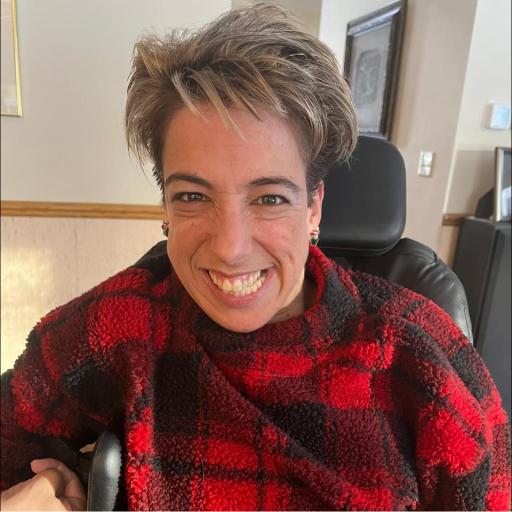
Stacy's Journal: The FEA Debacle

Switching insurance companies. Changing jobs. Switching doctors. Changing software programs. There are millions of different types of things that people change. Some changes are by choice while others are determined by situations or forced on people by circumstances out of their control. While some changes people have input in; others we don’t. When we don’t have input in the changes, it usually causes some tension and uneasy feeling. As human beings, we like say and having control over what’s happening in our lives. Generally speaking, things work better when people have some say in what is going on in their lives. Granted, there are exceptions to this, but, normally, things work better when people have some choice and input.
I first heard some chatter about Wisconsin moving to one Fiscal Employment Agency (FEA) for the IRIS Program several months ago. For those who don’t know what a FEA does, it basically does background checks, approval of workers, payroll, etc…for IRIS participants. Currently, there are three different FEAs that people can choose from. There used to be a couple more, but a couple have pulled out in recent years. FEAs are really what make the program run. In the 17 years I’ve been in the IRIS Program, I’ve been with three FEAs at different times. Each has its pros and cons. From worker approval times to timely payment of workers, to Electronic Visit Verification (EVV) systems, each FEA has their own positives and negatives.
IRIS participants know that dealing with a FEA can be incredibly frustrating sometimes. Just as an example—I get tickets for cab rides each month. I have to send in an order form at the beginning of each month for the next month’s tickets. It takes a month for the FEA to process the order and send payment to the vendor. Well, I hadn’t received my tickets for March yet, so I emailed the cab company. Come to find out, they hadn’t received payment from my FEA yet. My mom called my FEA and found out that the payment was delayed getting sent. Obviously, it’s not the end of the world that I didn’t get my cab tickets on time, but it’s a recent example of how frustrating it can be. Over the years, I’ve lost multiple workers due to not being paid on time or it taking too long for new people to get approved. I can’t even explain just how frustrating that is!
When I first heard that the state was planning to move to one FEA, admittedly, I didn’t pay as much attention as I should have. I was dealing with other immediate issues, and it wasn’t on my radar like it should have been. I don’t think it was widely advertised either. Unless people were involved in advocacy, they may not have been aware of this. I imagine that if was publicized a little more there would have likely been more pushback from advocates. The whole point of the IRIS Program about being able to self-direct and having choice. In my opinion, going to having one FEA completely dismantles the principle of the program.
The Request for Proposals went out awhile ago, and, just a few weeks ago, it was announced that a “notice of intent” was given to a FEA. As this news circulated in the disability community, people began talking. For starters, the one that was chosen would be completely new to Wisconsin—it wasn’t given to any of the three existing ones. A simple Google search of the name revealed that the FEA that the department intends to go with has had major problems in other states. The kinds of issues vary from workers not being paid to it taking several weeks for workers to get approved. The opposite of what participants need—especially in this day and age where there is so much uncertainty surrounding the future of long-term care.
I realize that the Average Joe probably doesn’t understand why this potential change is such a big deal. It’s a complicated system and, for IRIS participants, the FEA is ultimately who physically funds our services and supports we rely on in order to live our daily lives.Amidst of already uncertain times, the last thing participants want to hear is that we’re going to have to deal with a whole new company and system that is known to have major problems.
Advocates weren’t given the opportunity to provide input on this, or if there was, it wasn’t well advertised. Doing this in a program that is supposedly “self-directed” is a huge step backwards. Rumor has it that there are a couple companies contesting the decision, so we’ll see what happens with that. Meanwhile, advocates are talking with the department and legislators telling them that this whole thing is a bad decision and how it would potentially impact people’s lives.
While we don’t know the outcome of this, it demonstrates how a seemingly minor change to many has the potential to completely disrupt life for others. The disability community will continue to advocate and hope for the best on this issue while also realizing that we may have to continue to advocate on this even after the final outcome has been has been decided.
Change can be hard for everyone. While some changes are unavoidable, others are. When a change of this magnitude has the potential to change so much, input from those who’s lives it’s going to affect should be taken into consideration. As cliché as it sounds, the saying, “nothing about us, without us,” is poignant in this situation. As frustrating as it is, we will continue to advocate and let our voices be heard!
***The views expressed here are strictly those of the author and do not necessarily reflect those of InControl Wisconsin, the Network or any of our sponsors

